The Paradox of Heat: Understanding Iceland’s Blue Lagoon In the heart of Iceland's rugged Reykjanes Peninsula, the Blue Lagoon
Report Conclusion: While "The Blue Lagoon Hot" created a visually stunning, intense azure spectacle, it highlights the volatility of man-made systems interacting with geological forces. The facility remains closed until thermal equilibrium is restored and declared safe by the IGSC.
Mara closed her eyes and let her breath match the water. A light breeze combed her hair; a far-off bell ordered the last fishermen home. She could feel the day's heat unspooling from her shoulders. When she opened her eyes, she saw a silhouette at the reef's edge: a man, tall, hatless, sleeves rolled to the elbow, like somebody who had stepped out of a photograph. the blue lagoon hot
Blue Lagoon is Iceland's most famous geothermal spa, located in a lava field on the Reykjanes Peninsula. Its milky-blue water is naturally heated to between 98 raised to the composed with power F 104 raised to the composed with power F 37 raised to the composed with power C 40 raised to the composed with power C ) year-round. Guide to Iceland Essential Prep & Booking Pre-booking is mandatory : You cannot simply walk in; book weeks in advance on the Blue Lagoon Official Site Arrival timing : Morning slots are less crowded. Most people spend 2–3 hours in the water.
"The Blue Lagoon" is a 1980 American romantic adventure film directed by Randal Kleiser, starring Brooke Shields and Christopher Atkins. The movie is a classic tale of young love, survival, and self-discovery. The Paradox of Heat: Understanding Iceland’s Blue Lagoon
The heat softens the algae and silica on the walkways, making them extremely slippery. Add in that your feet are warm and slightly numb, and you have a recipe for falls. Walk slowly and use the handrails.
: It is often featured in reading comprehension tests (such as those from Insight Publications A light breeze combed her hair; a far-off
The lagoon was hot. Not the advertised 38 degrees Celsius. Hotter. A hidden fissure had opened two weeks ago, feeding a new vent directly into the deepest basin—the one they’d cordoned off with floating orange barriers. The sensors showed 54 degrees near the bottom. Possibly 60. The plant manager had ordered her to reroute the flow. She had a better idea.
She came there at dusk, when the sun leaned low and the sky forgot rough edges. Tonight, the air tasted of mango skins and the distant thrum of a ferry engine. She waded in until the water cupped her waist, and the heat seeped up through the soles of her feet, up her calves, settling somewhere behind her ribs. The lagoon made a slow music—soft pops and the lazy sigh of bubbles—and created an intimacy that was impossible on land.

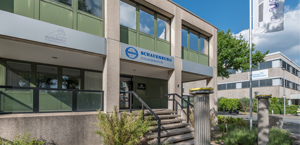
SCHAUENBURG Industrietechnik GmbH
Am Keuper 17
DE-90475 Nürnberg | Germany
Tel.: +49 9128 72 120 - 0
Fax: +49 9128 72 120 - 99
E-Mail:
www.schauenburg-industrietechnik.com ▸


Unsere Marken:
bpt Bayerische Profiltechnik®
VIGOT® Schlauchtechnik
Landingpages:
Feuerschutzschlauch ▸
MAXIMALL® Schlauchsysteme ▸
Kunststoffspritzguss ▸
Schlauchsysteme eKatalog ▸
Partnerschaften:
VIGOT® meets Braunwarth®
Überlingen, Deutschland
www.braunwarth-vigot.de ▸

Betriebsstätte Augsburg
Derchinger Str. 143
86165 Augsburg, Deutschland
Betriebsstätte Bremen
Ingolstädter Straße 7
28219 Bremen, Deutschland
Betriebsstätte Bochum
Wiescherstraße 86
44805 Bochum, Deutschland
Betriebsstätte Mülheim a.d. Ruhr
Lahnstraße 30
45478 Mülheim-Ruhr, Deutschland


Vertriebsbüro Baden-Württemberg
Adolf-Heim-Straße 11
74321 Bietigheim-Bissingen, Deutschland
Service Point Rhein-Main
Standort Hofheim am Taunus, Deutschland
www.mobile-schlauchpruefung.de ▸
© 2026 OnFountain — All rights reserved.







 Zu den Betriebsstätten ▸
 Starten Sie Ihre Karriere mit uns ▸