I--- Od Absolutyzmu Do Republiki Sprawdzian ^new^ -
I – Od Absolutyzmu do Republiki Sprawdzian: Kompendium Wiedzy, Pytania i Odpowiedzi
Wprowadzenie
Rozdział "I – Od absolutyzmu do republiki" to jeden z najważniejszych i najbardziej dynamicznych fragmentów podręcznika do historii dla klasy 6 szkoły podstawowej (lub odpowiednika w starszych klasach według nowej podstawy programowej). Obejmuje on przełomowy okres w dziejach Europy i Polski – schyłek XVII wieku oraz cały wiek XVIII. To czas, gdy w Europie Zachodniej kwitł przepych dworu Ludwika XIV (absolutyzm), podczas gdy Rzeczpospolita Obojga Narodów pogrążała się w chaosie politycznym, by ostatecznie podjąć heroiczną, choć spóźnioną próbę ratowania się przez reformy.
4. The Glorious Revolution (1688):
Proces odchodzenia od absolutyzmu nie był jednorazowym wydarzeniem, lecz długotrwałą walką o podmiotowość jednostki. Przejście do republiki i monarchii parlamentarnej stworzyło fundamenty pod dzisiejszą demokrację, przekazując suwerenność z rąk jednostki (monarchy) w ręce narodu. Czy chcesz, abym przygotował listę najważniejszych dat i pojęć , które najczęściej pojawiają się na tym sprawdzianie? i--- Od Absolutyzmu Do Republiki Sprawdzian
I--- Od Absolutyzmu do Republiki – Kompletny Przewodnik po Sprawdzianie
Wprowadzenie: Co oznacza ten temat?
Jeśli szukasz materiałów do sprawdzianu z działu "Od absolutyzmu do republiki", trafiłeś we właściwe miejsce. Ten artykuł jest szczegółowym repetytorium, które pomoże Ci zrozumieć przełomowy okres w dziejach Europy i świata – czas od upadku monarchii absolutnych (szczególnie we Francji) po narodziny nowożytnych republik.
1787: The signing of the US Constitution, the world's first modern constitution. Sample Test Questions I – Od Absolutyzmu do Republiki Sprawdzian: Kompendium
Deklaracja Niepodległości Stanów Zjednoczonych została podpisana w:
a) 1688 r.
b) 1776 r.
c) 1789 r.
d) 1791 r.
C. Zadanie na dopasowanie (przyporządkuj postać do wydarzenia)
| Postać | Wydarzenie |
| :--- | :--- |
| A. Thomas Jefferson | 1. Ostatni król Polski |
| B. Stanisław August Poniatowski | 2. Główny autor Deklaracji Niepodległości USA |
| C. Jean-Baptiste Colbert | 3. Dowódca armii amerykańskiej, późniejszy prezydent USA |
| D. Jerzy Waszyngton | 4. Minister finansów Ludwika XIV | Czy chcesz, abym przygotował listę najważniejszych dat i
W którym roku uchwalono Konstytucję 3 Maja?
a) 1776
b) 1789
c) 1791
d) 1795
Since I don’t have the exact test in front of me, I can provide a helpful review report covering the key topics, typical question types, and essential knowledge you’d need for such an exam. This is based on standard history curricula (especially for Polish high schools "Historia" or "WOS" subjects, often covering the transformation of political systems from monarchy to republic).
The program can do so many things — this list is far from complete
- Do conversions from the 400+ audio related file formats that it can read, into any of the 260+ formats that it can write.
- Read and write the instrument formats of many commercial synthesizers, hardware modules, and software synths —
including formats from AKAI, Ensoniq, Korg, Kurzweil, Roland, Yamaha, Native Instruments, and many more.
High quality conversion can be made between most formats, preserving important synthesis parameters such as envelopes and LFOs.
- Read several disk formats that cannot normally be accessed by Windows, including CDs from AKAI S-1000, AKAI S-3000, E-mu Emulator III, Kurzweil, and Roland S-5xx and S-7xx series.
- Up to 32-bit floating point data precision for mono and stereo data.
- Fully supports SF2 and DLS level 2, as well as a large subset of SFZ v2.
- You can also use it as an editor for many other synths — for some, it is the only PC editor.
- Data is organized in an easy-to-use three pane layout — with a hierarchical instrument tree to the left, a waveform list in the middle, and a property inspector to the right.
- Graphical editors for instrument parameters — e.g. the much-applauded loop editor that lets you easily find the best loops.
- Edit parameters for multiple items simultaneously — as quickly and easily as you edit a single item.
- Audition, i.e. play & listen to, instruments directly using the PC keyboard or an external MIDI keyboard.
- Convert song data between several formats (e.g. MOD-tracker modules into SMF accompanied by custom instruments).
- Render your songs into audio clips with superior audio quality using the bult-in software synthesizer.
- Convert FM-synthesis instruments into sampled instruments — with support for all major Yamaha DX-series SysEx formats.
- The Batch conversion tool makes converting large numbers of audio files extremely simple — including optional effects processing.
- Processing functions help you with tasks such as resampling, fading, merging, splitting, normalizing, or searching and replacing text metadata.
- The Audio recording function not only records audio, it can also automatically sample any MIDI or VSTi 2.x instrument.
Ok, so what doesn't it do?
It can only do very basic low-level MIDI event editing (look elsewhere for a sequencer).
It won't handle more than 2 audio channels (so no surround sound).
It needs to fit all audio data into memory (but RAM is plentiful today).
It can't transcribe audio recordings into MIDI notes (look for an AI tool for that).
If you are unsure if it is for you — then why not download the free 30 day trial version? Seeing is believing!
You can try almost all functionality — we don't hide any ugly surprises — we have confidence in our product.
→ Screenshots…
Screenshots
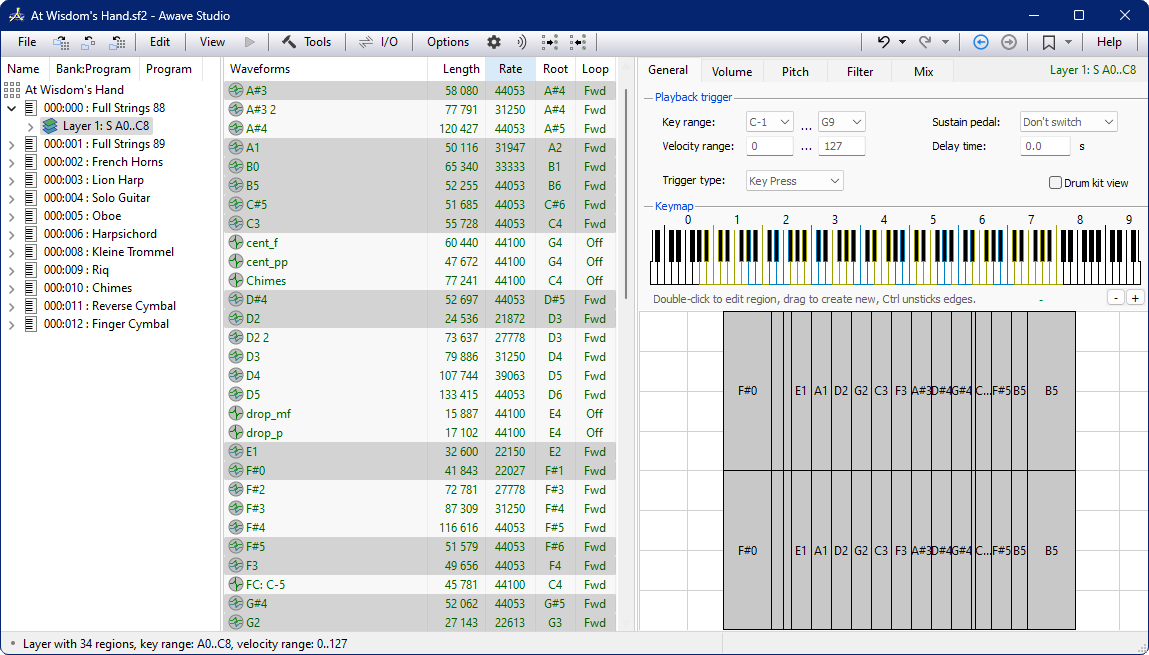
Awave Studio main window
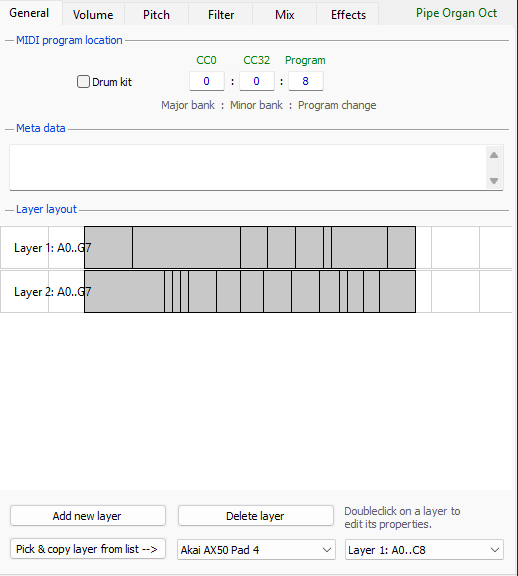
Instrument general tab with layer overview
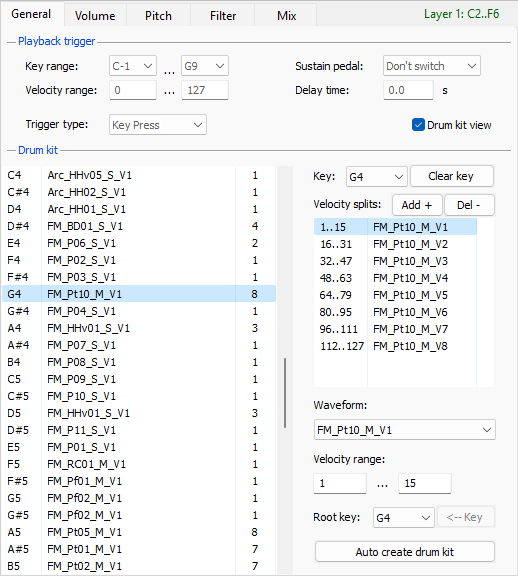
Layer general tab with drum kit editor
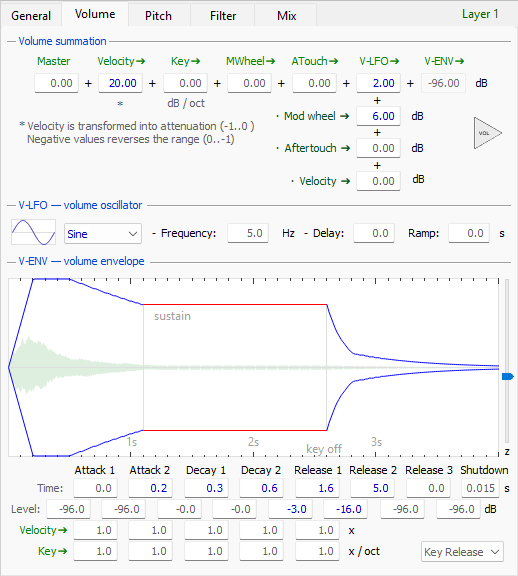
Volume articulation tab, with lfo and envelope editor
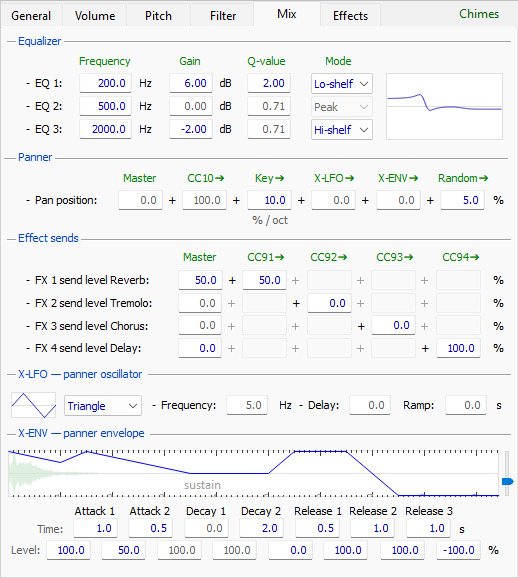
Mix articulation tab, with EQ, panner and sends
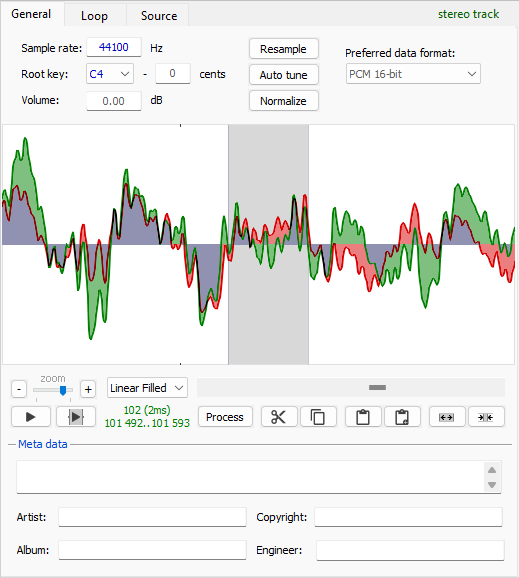
Waveform general tab, with the waveform editor
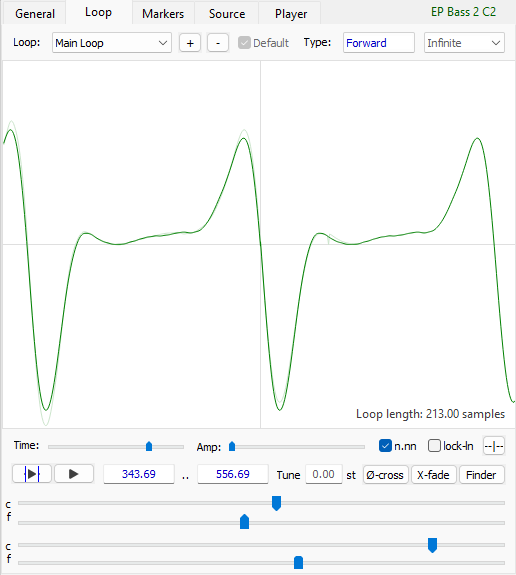
Waveform loop tab, with the loop point editor

Audio recording - step 1 - Setup and config

Audio recording - step 2 - Recording and post-processing
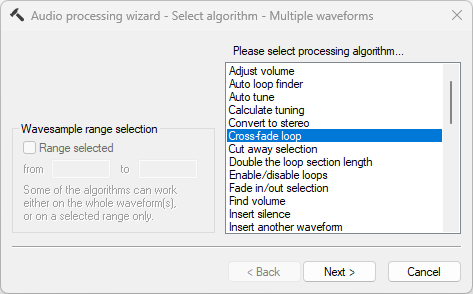
Audio processing functions
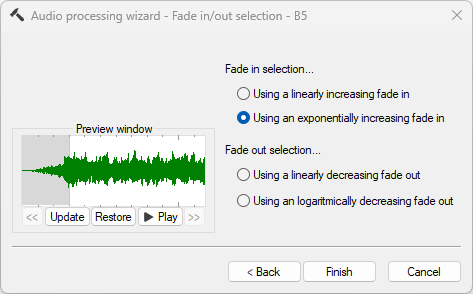
Audio processing example
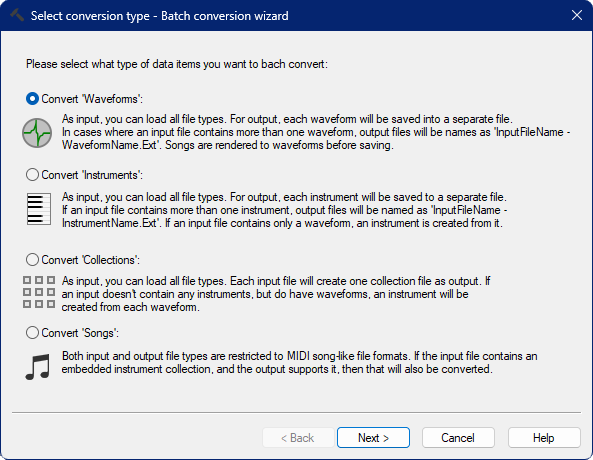
Batch Conversion tool - Step 1: Select batch type
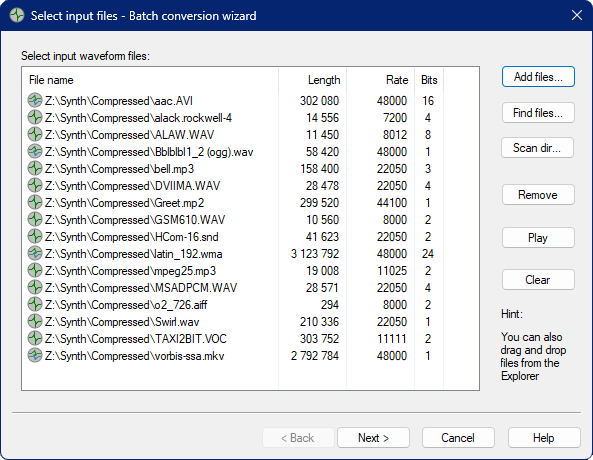
Batch Conversion tool - Step 2: Select input files
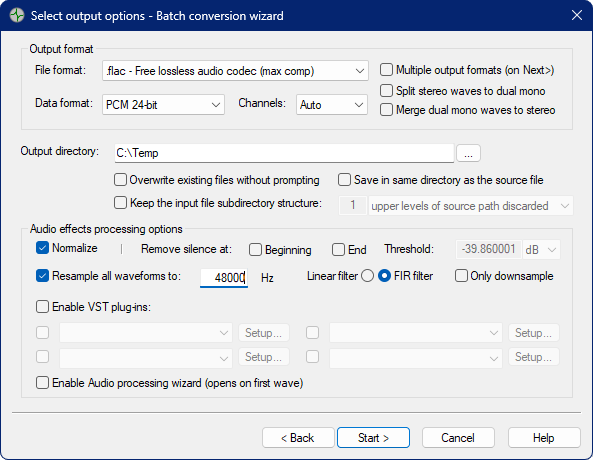
Batch Conversion tool - Step 3: Select output options
Awave Studio is commercial software marketed as Shareware.
This means that you get to "try it before you buy it" — a very honest way of selling a product, hiding no surprises!
If you find that you like it, and wish to continue using it past the 30 day free trial period, then you need to buy a license.
Note that this software is supported for Windows only
(on other platforms, you can try Wine, but be sure to test before buying).
Buying it will:
- Remove the "nag screen" and annoying reminders.
- Remove the "restart after each save" limitation.
- Enable locked features — e.g. saving collections and batch conversions.
- No iLok, USB key, or constant online connection required — no hassle, no fuss!
Buy it on-line here:
All payments are handled by PayPal.
Most credit cards are accepted.
You do not need a PayPal account.
EU-customers: VAT will be added to the price.
When you buy it, you will be sent a personal license key by email.
Note that this email is
NOT sent out immediately —
We normally process your order within 24 hours.
License and delivery:
What happens next?
After we have received your order, we will send you an email with a personal license key file that unlocks the trial version into the full version.
If you have not received your code after 24 hours, first do check your "spam" or "junk" folders before contacting us.
How may I use it?
What you buy is a single user license.
You are allowed to install it on more than one computer, but you are not allowed to let other persons use it.
The license is personal and issued in your name. It cannot be transferred or resold.
What is your upgrade policy?
We have a policy of a minimum of two years of free upgrades, meaning that any new major version that may be released within two years from the purchase date will be a free upgrade. After that period, there may be an upgrade fee for a major update.
Minor version updates are always free if you own the same major version, regardless of the time that has passed.